
Best Sleeping Position to Stop Snoring

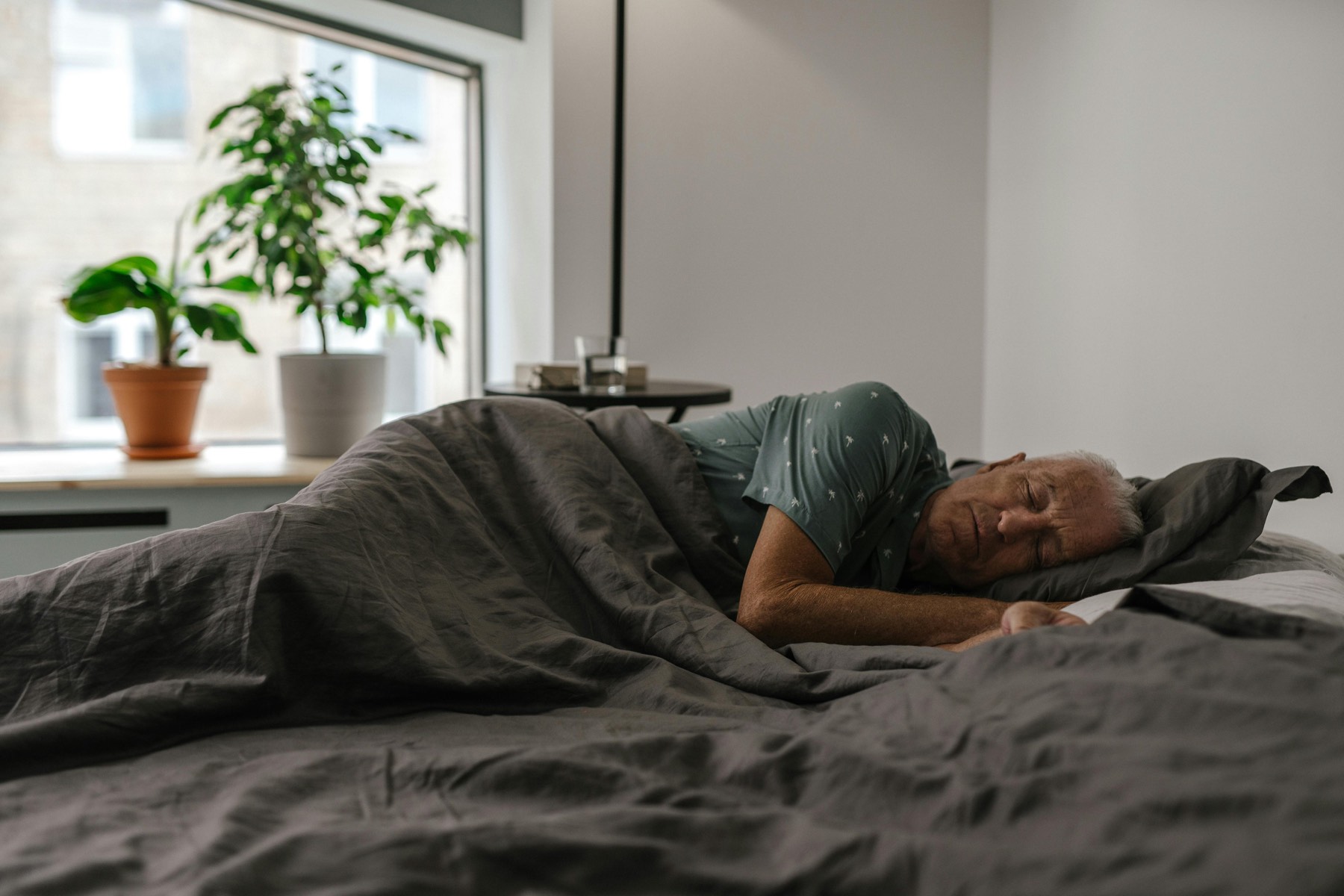
The best sleeping position to stop snoring is on your side. Lying on your back lets gravity pull your tongue and soft palate backwards, which narrows the airway and makes snoring louder. Sleeping on your side keeps the airway more open. This is a self-help step, not a diagnosis, so see your GP if snoring comes with breathing pauses or daytime tiredness.
If your partner says you snore worst when you are flat on your back, they are onto something. The best sleeping position to stop snoring is one of the few snoring triggers you can change tonight, for free. Here is what the evidence says and how to make a side-sleeping habit stick.
Why does sleeping on your back make snoring worse?
Snoring happens when relaxed tissue at the back of the throat vibrates as you breathe. When you lie on your back (the supine position), gravity pulls your tongue and soft palate backwards, which crowds the airway. Air then has to squeeze through a narrower gap, so the vibration gets louder and more frequent.
In a study measuring snoring across positions, the supine position produced the most and longest snoring, plus the highest sound intensity. The NHS also lists sleeping on your back as one of the things that makes snoring more likely.
Which sleeping position is best, side or front?
Side sleeping (the lateral position) comes out clearly ahead. In the same research, people who slept on their side significantly reduced both how long they snored and how loud it was. Sleeping on your front can help a little compared with your back, but it is harder on your neck and most people find it uncomfortable.
| Position | Effect on snoring |
|---|---|
| On your back (supine) | Usually the worst: loudest and most frequent |
| On your front (prone) | A bit better than your back, but awkward |
| On your side (lateral) | Usually the best: quieter and less frequent |
How do I stop rolling onto my back at night?
The classic trick is the tennis-ball method: sew or pin a tennis ball into the back of your nightshirt so rolling over feels uncomfortable and you settle back onto your side. Modern positional aids do the same job more gently.
- Sew a tennis ball (or a sock with a ball in it) into the back of a fitted top.
- Try a wedge pillow or a body pillow to prop yourself on your side.
- Use a positional trainer (a small worn device) if you want a tidier option.
Position changes help mild and moderate snoring most. For a fuller rundown of aids, see positional therapy for snoring, and for the wider picture try our guide on how to stop snoring.
Sources
- NHS: Snoring
- Nakano et al, Effects of body position on snoring (Sleep)
- The Potential Effect of Changing Patient Position on Snoring: A Systematic Review
FAQ
Does sleeping on your side really stop snoring?
For many people, yes, or at least it makes snoring much quieter. Side sleeping keeps the tongue and soft palate from falling back into the airway. It tends to help mild to moderate snoring most. If you snore heavily on your side too, that is worth raising with your GP.
How can I tell if changing position actually helped?
Track it. A few nights on your back, then a few on your side, gives you something to compare. An app like Kip records and scores your snoring on your iPhone, so you can see whether the change made a real difference. The audio stays on your phone and is never uploaded. See how to track snoring for the method.
When should I see a GP about snoring?
See your GP if your snoring comes with pauses in breathing, gasping or choking, or you feel exhausted during the day. Those patterns can be consistent with disrupted sleep, and only a sleep study can diagnose sleep apnoea. An app cannot diagnose anything, but a week of tracking gives your GP useful detail.